Do you take pride in your hurt? Does it make you seem large and tragic?… Well, think about it. Maybe you’re playing a part on a great stage with only yourself as audience.
East of Eden and the Ghost of a Friend
This quote has lived rent-free in my head since I first read it in East of Eden, John Steinbeck’s masterpiece. Samuel challenges Adam, who has spent months consumed by grief and self-pity after being shot and abandoned with their infant twins by his wife Cathy. Here goes Samuel, a Mensch of all Mensches, a friend who’d rather serve the harsh truths after enough time than seeing his friend wallow in self-pity, destroying himself, the twins, and any hopes of a nascent community around him.
Steinbeck is one of my early loves. Of Mice and Men is probably one of the first classics I read, for its accessibility, and length. Grapes of Wrath became a foundational novel in my pantheon from the moment I first read it around 16. Yet it wasn’t until East of Eden, read at the age of 20, 21, after a strong recommendation from my best friend Jason, that my love fell at its deepest for the author. It was a somewhat rare occurrence, getting to share literature with my group of friends. Some of them read a lot in French, I read a lot in English, and beyond some overlap of the American classics, a fair bit was lost in translation. Until this moment, when Jason recommended East of Eden to the group, to Alice and Victor who loved it immensely, Antoine and Adele must have read it too, and finally it got back to me, who somehow hadn’t gotten to it yet, as it is slightly less discussed than Pullitzer-winning Grapes of Wrath. East of Eden was incredible. Crowning achievement. Felt so human, so deep, so real. I’ll always cherish that quote, something Jason accused me of in that year him, Antoine, and me moved to Gare du Nord, Paris, to a squalid little apartment, Jason’s bedroom 6m2, mine 8 and my only window opening up to Antoine’s largest room at a regal 11m2, give or take. That year was tough, and after a post-move buffer of a few weeks, once Jason saw how I was wasting my life away, he (rightfully) avoided for me some months, hurt for me. Anyhow. He accused me of enjoying not only my pain and apathy, but the performance of it.
This resonated deeply with me. I’d love to say that I got my shit together after reading this quote, after Jason channeled his best Samuel, and that we all formed a meaningful, loving community together ever after. But no, we started drinking together, I fucked off to Australia then Germany, and we drifted off rather steeply after a few years. Jason got his life together after some failed studies, became a carpenter, built a tiny house for himself and his girlfriend somewhere in southwestern France, and works on bettering his community, while I have been cyclically acting out my best Adam and a fairly poor Samuel. Sorry Jason, mate, I am trying once more, and your impact on my life can’t be understated. I hope I’ll feel good enough to shoot you a message and come visit. I hope I won’t be too pathetically triggered by your success, by you living a life I could hardly dream of. I love you.
Where was I? Yes, Steinbeck is the shit. I hadn’t read him in a long ass time, and right before the Winter of our Discontent I had read The Moon is Down, a delightful novella, acutely depicting both quiet and loud horrors of war and occupation, as well as the dangers of fascism, bureaucratic fascism. You know what, it wasn’t the plan, but I might as well revisit the quotes I saved about that book too, Winter of our Discontent can wait a minute.
The Moon is Down: Bureaucratic Fascism
I’m going to stay honest, I thought the setting was a nondescript place in Europe, apparently the small village being efficiently invaded by nazis is in Norway. Moon is densely packed with dialog, about silly little young men playing their silly little wars for silly ‘leaders’ they will never know or the vague concept of a ‘country’ they have been indoctrinated into killing and being killed for. That silliness is highlighted by sarcastic narrator, and by the older, wiser men and women who better know what war is like, but are just as equally powerless to halt its march.
Doctor Winter repeated, “Eleven o’clock, and they’ll be here then, too. A time-minded people, Joseph.”
And Joseph said, without listening, “Yes, sir.”
“A time-minded people,” the doctor repeated.
“Yes sir,” said Joseph.
“Time and machines.”
“Yes, sir.”
“They hurry toward their destiny as though it would not wait. They push the rolling world along with their shoulders.”
Sometimes the quotes you saved don’t hit quite as hard as you would have liked them to. Still, the thought of Germans being ‘time-minded people’ is somewhat amusing after having spent a decade in their midst. A rather punctual people, I’ll give you that, especially compared to lax southern Europeans, but the Deutsche Bahn is a running joke for a reason. As for that last sentence, I recall it being the moment I chose to write the quote down, as it is, to me, a great image of the incredible, efficient haste with witch Germans, propelled by Nazism, hurled themselves forward, rebuilding their war economy towards WW2 in so few years after the dredge and toll of the previous war. An odd, harried Sisyphus, or atlas-like figure pushing that boulder around bloody tracks going in circles, frantically going as hard, as fast as possible, ‘as though destiny would not wait’.
‘He had been Mayor so long that he was the Idea-Mayor in the town. Even grown people when they saw the word “mayor,” printed or written, saw Mayor Orden in their minds. He and his office were one. It had given him dignity, and he had given it warmth.’
This is what I love about the written word. Being able to instill such quaint yet precise, accurate ideas into our minds, of prime conceptualization of words. We all have a ‘tree’ in mind when we read the word, and I bet you, that tree is going to look different depending on who you are and where you grew up. And then that final punch: ‘it had given him dignity, he had given it warmth’ characterizes him so precisely with so few words. Delightful.
‘There was Major Hunter, a haunted little man of figures, a little man who, being a dependable unit, considered all other men either as dependable units or as unfit to live. Major Hunter was an engineer, and except in case of war, no one would have thought of giving him command of men. For Major Hunter set his men in rows like figures and he added and subtracted and multiplied them. He was an arithmetician rather than a mathematician. None of the humor, the music, or the mysticism of higher mathematics ever entered his head. Men might vary in height or weight or color, just as 6 is different from 8, but there was little other difference. He had been married several times and he did not know why his wives became very nervous before they left him.’
Poetry. Major Hunter is quite a minor character in Moon is Down, but had he never again been mentioned throughout the rest of the novel, this paragraph justifies him, and then some. What a paragraph. I could and should wax poetics about it for a whole article, tell you about the Major Hunters I have met in Germany, about the cliché and the reality, but it would tell you little more than what Steinbeck did in a mere 138 words. ‘An arithmetician rather than a mathematician.’ is the greatest insult one could hurl at these little minds, who nonetheless arguably formed one of the greatest strengths of one of the greatest armies the world has ever seen. Colorless arithmetic, ‘none of the humor, music or mysticism’ of Mathematics, and its most artistic, aesthetic of applications. What a gem of a last sentence, once more. Sometimes the decision as to where to cut off the quote is a difficult one, others are no-brainers.
‘Lieutenant Prackle carried a lock of hair in the back of his watch, wrapped in a bit of blue satin, and the hair was constantly getting loose and clogging the balance wheel, so that he wore a wrist watch for telling time.’
Yet another delicious tidbit, rather easy to miss, but a more stupendous insult, illustration of deep incompetence and stupidity, I couldn’t fathom. Maybe in a slightly less critical, gentler note: Lieutenant Prackle, and most characters are idiosyncratic, silly, naïve humans, just like all of us. Their wiser counterparts are also ridiculous in many ways, if only slightly less disabused, which sometimes paints them are almost worse, as they ought to know better. Colonel Lanser fought in World War I, has a pessimistic (realistic) perspective on the true nature of war(s), and shouldn’t still be there, even if that career is all he knows, even if he lies to himself that he’s mostly there to insure things go ‘smoothly’. There is no such thing as ethical participation in war.
And finally:
‘Down toward one end of the village, among the small houses, a dog complained about the cold and the loneliness. He raised his nose to his god and gave a long and fulsome account of the state of the world as it applied to him. He was a practiced singer with a full bell throat and great versatility of range and control.’
In a foreshadowing bid, this reads like McCarthy to me (I am currently reading Outer Dark, planning to write one of the next articles on it and his other novels I adore), which is unfair to Steinbeck, as the latter predates and influenced the former. Was this quote borne out of the jocular anagram between dog and god?
-Is this joke Christopher Hitchen’s? Somehow I have it tied to my angry atheist phase… What do you get if you cross an insomniac, an agnostic, and a dyslexic? Someone who stays up all night wondering whether or not there is a dog-
I’d like to think so. What strikes me as McCarthyish about that quote is the evocation of the cold and dark state of the world. The word ‘fulsome’ too. I had to relearn it: ‘excessively complimentary, insincere, or abundant, copiously detailed’. One can only imagine the heartfelt plea of the dog howling at a pale cold moon, singing artfully about his harsh lot. The last sentence shredding our common and unfair arbitrary distinctions between animals. Is a dog any less skilled of a singer than our best? By what anthropocentric criteria?
The Winter of our Discontent: Erosion of Ethics
The Moon is Down is an elegant, concise 144 pages (I need to mind my vocabulary, if you add dense, it is something like 40% of my commentary…), The Winter of our Discontent stretches on maybe a touch too long for about 311 pages. It relies more on its plot on top of a general message (anti-bureaucracy/fascism/war for Moon, anti-capitalism for Winter), as the ethical trials and tribulations of Ethan after his father dilapidated the family wealth, turning him into fallen nobility, down and out coming back after WW2.
That added length does build up on the novel’s depth, with Ethan’s struggles being masterfully rounded up in the later part of the book. His guilt, despair at seeing his own corruption (by the forces of capitalism, greed and pride embodied) mirrored in his son’s plagiarism, reviving a shame he had barely been able to overcome, before being saved by his familial duty to choose life, breaking through his self-loathing, all of this is incredibly well executed in the last few chapters. Simply a great read, politically engaged in a way that illustrates why I cherish literature so. Overt yet subtle. How could anyone read this and not get, deeply feel the critical point is beyond me.
Before I get to the quotes I saved. The title, famous opening lines to Shakespeare’s Richard III, has been a part of my life for quite some time, already before I randomly picked up ‘The Winter of our Disconnect’ by Susan Maushart at the Abbey Bookshop in Paris, around the age of 18 (already a sucker for Shakespearian puns for titles back then, maybe from Nabokov’s Pale Fire -an actual masterpiece, nothing to do with Disconnect, innocuous recollection about forcing a middle class family to eschew technology for a few difficult-yet-ultimately-blissful months). There. Just wanted to mention it.
First off an array of shorter quotes, bound to be more aesthetic, or lightly pleasant than the longer ones to follow, where I wrote down page numbers on my notebook (14, 18, ‘196 Hiroshima’, and 5 little scraps of paper as bookmarks when I couldn’t even write that down), to pen down fully once I’d have the time and inclination to do so.
‘The yellow-painted bulldozer and the big crane that swung the wrecking ball were silent like waiting predators in the early morning.’
Simple, lively description. The bull and crane’s animalistic nature brought to the spotlight. The quiet force of unassuming sentences that tie the novel together. Sharp observations that elevate it.
‘She was laughing her lovely trill, something that raises goose lumps of pleasure in my soul.’
How can one not get a deep love for women and their beauty after reading Steinbeck or Nabokov? Yet these two are men. Observant, lyrical, yet men, with faults aplenty, I am sure. ‘goose lumps of pleasure in my soul’. I feel you.
‘The set table seemed fine and very white and the silver which wasn’t silver looked extra silvery.’
Delightful repetition, making the joy of that double date so much more luxuriant, magic trick turning the shabby marvel.
‘In June man, hustled by instinct, mows grass, riffles the earth with seeds, and locks in combat with mole and rabbit, ant, beetle, bird, and all others who gather to take his garden from him.’
I wish. In passing mention of such a joyful showdown between Nature and Men, briefly demoted to their animalistic, territorial nature. Would women be ‘locked in combat’ with ‘pests’ or rather deter those beautiful creatures from overindulging in the bounty of her plentiful bosom? We will never know, as Johnny boy never mentions it, the women in Winter of our Discontent are quaint, frail, at best manipulative, but mostly porcelain princesses to be cherished and protected. Which shouldn’t distract from the imagery here, capitalism, and Ethan’s indoctrinated capitalist philosophy perfectly illustrated here.
‘But Danny remained a burning in my guts and I had to accept that as one accepts a wound in successful combat. I had to live with that, but maybe it would heal in time or be walled off with forgetfulness the way a shell fragment gets walled off with cartilage.’
What a metaphor, so aptly military, warlike, for life is combat under capitalism, pinning one’s fortune against other’s, in a zero-sum-game. Betraying, effectively manipulating Danny into suicide to inherit the immensely valuable property he had himself inherited from his family’s rich industrious past. Ethical ‘compromises’ as requirement to liberal success, here hyperbolic in Ethan killing his best friend to plunder his belongings over helping him to profit from it. Ethan can only get rich if Danny doesn’t capitalize from it. A wound that might ‘heal’, or more likely, be ‘walled off with forgetfulness’.
For Steinbeck’s first lengthier quote, we go back to vivid, imaginative, metaphoric descriptions:
‘The store was greeny from the drawn shades over the big front windows. Again shelves to the ceiling, filled neatly with gleaming canned and glassed foods, a library for the stomach. On one side -counter, cash register, bags, string, and that glory in stainless steel and white enamel the cold cabinet, in which the compressor whispered to itself. Ethan flipped a switch and flooded the cold cuts, cheeses, sausage, chops, steaks, and fish with a cold bluish neon glare. A reflected cathedral light filled the store, a diffused cathedral light like that of Chartres. Ethan paused to admire it, the organ pipes of canned tomatoes, the chapels of mustard and olives, the hundred oval tombs of sardines.’
What is life outside of beauty in the ordinary. The holy church of a grocery store, at first cause for Ethan’s dismay before turning his salvation. Capitalist redemption of returning to the natural order of capital owner after a brief generational fall from Grace. Consumption God, cash register his altar with tolling bell. Money begets money, says Baker the banker, whose family remained on top after tricking its way into a ‘successful’ transition from whaling business to banking and fraudulent investing (a tautology if I ever wrote one). Ethan’s most humanizing moment, when he isn’t gushing himself silly over his Mary, or cheerfully in awe of his imperfectly perfect children, is when he preaches or expunges his sins to his choir, his parish of canned goods. ‘A library for the stomach’, ‘the organ pipes of canned tomatoes, the chapels of mustard and olives, the hundred oval tombs of sardines’. Haven’t we all learned to pick our metaphors? Library, church, and tombs in one paragraph? Yet it works. Once more, conventions be damned, don’t take writing advice from teachers and randoes, take ‘em from those who transgress them to higher peaks than any of the former could ever fathom in their neat, organized little minds.
I previously mentioned Steinbeck’s subtlety in calling out systemic flaws in capitalism. This isn’t one of those times. In this next quote the author takes you by the hand and expounds on the truths of this world, as Mr. Baker remonstrates Ethan:
“Now that’s what I don’t understand, Ethan. Anybody can go broke. What I don’t see is why you stay broke, a man of your family and background and education. It doesn’t have to be permanent unless your blood has lost its guts. What knocked you out, Ethan? What kept you knocked out?”
Ethan started an angry retort- Course you don’t understand; you’ve never had it- and then he swept a small circle of gun wrappers and cigarette butts into a pyramid and moved the pyramid toward the gutter. “Men don’t get knocked out, or I mean they can fight against big things. What kills them is erosion; they get nudged into failure. They get slowly scared. I’m scared. Long Island Lighting Company might turn off the lights. My wife needs clothes. My children-shoes and fun. And suppose they can’t get an education? And the monthly bills and the doctor and teeth and a tonsillectomy, and beyond that suppose I get sick and can’t sweep this goddamn sidewalk? Course you don’t understand. It’s slow. It rots out your guts. I can’t think beyond next month’s payment on the refrigerator. I hate my job and I’m scared I’ll lose it. How could you understand that?”
There is something understatedly powerful here. As I typed this I couldn’t quite feel what brought me to pause and jot down the page number for later recollection. And yet I see it somewhat. Something I’m afraid you, reader, without having read the book, might not get to experience. The context of the book gives it strength and relevance. Especially the hindsight, seeing the cost of Ethan’s emancipation, for his soul, for his best friend Danny, for his son, and ultimately, for those United States, for the world. The internal rot Ethan describes almost ends up being preferable to participating in spreading it, literally sowing death and misery around you. The ethical alternative is to fight the system, yet in our increasingly individualized society, what formidable opponent it seems to be. Personally, for too long have I opted out of that clean fight, choosing apathy, small scale healing and loving, blind to a way out of serfdom that wouldn’t involve rampant domination and individualism, both abhorrent to me. As insignificant as it may appear, this is my attempt at reconnecting with the fight, sharing the nuanced complexity of art to foster critical thinking and empathy, which ultimately, will lead to opposing this current system. Glad to have you joining me. On to the next quote. This next one is long again, and yet I don’t quite want to skip it, as it stands a beautiful, immortal lesson on money, so bear with me.
Mary, Margie, Women under Capitalism
“I don’t see how a little money could spoil anything. Not a lot of money-just enough.” I didn’t answer. “Well-do you?”
I said, “O prince’s daughter, there is no such thing as just enough money. Only two measures: No Money and Not Enough Money.”
“Why that’s not true.”
“That is true. Remember the Texas billionaire who died recently? He lived in a hotel room and out of a suitcase. He left no will, no heirs, but he didn’t have enough money. The more you have, the less enough it is.”
She said sarcastically, “I suppose you find it sinful for me to want new living-room curtains and a water heater big enough so four people can bathe the same day and I can wash dishes too.”
“I was not reporting on sin, you juggins. I was stating a fact, a law of nature.”
“You seem to have no respect for human nature.”
“Not human nature, my Mary-nature. Squirrels bank ten times as many hickory nuts as they can ever use. The pocket gopher, with a stomach full to bursting, still loads his cheeks like sacks. And how much of the honey the clever bees collect do the clever bees eat?”
When Mary is confused or perplexed, she spurts anger the way an octopus spurts ink, and hides in the dark cloud of it.
“You make me sick,” she said. “You can’t let anyone have a little happiness.”
“My darling, it isn’t that. It’s a despairing unhappiness I’m afraid of, the panic money brings, the protectiveness and the envy.”
She must have been unconsciously fearful of the same thing. She struck at me, probed for a hurting place, and found it and twisted the jagged words. “Here’s a grocery clerk without a bean worried about how bad it will be when he’s rich. You act as though you could pick up a fortune any time you want to.”
“I think I can.”
“How?”
“That’s the worry.”
“You don’t know how or you’d have done it before. You’re just bluffing. You always bluff.”
The intent to wound raises rage. I could feel the fever rise in me. Ugly, desperate words moved up like venom. I felt a sour hatefulness.
I’ll stop here, the rest of the page Mary diffuses the tension and they drop the conversation. There is an obvious and disturbing view of women in Steinbeck, fruit of its time. Madonna (literally Mary) or whore (wily Margie). I am aware it is easier to look past it, as a cishet white man, but let us overlook it nonetheless, lest we miss out on important lessons still very much applicable today. What an exchange. What I just wrote about the previous quote applies here just as well, if not better. The human nature discussion. Highjacked by pseudo-scientists, as if a shallow understanding of evolutionary psychology could explain today’s world. Here Ethan highlights Nature not accounting for progress. If our ancestors (and bees, squirrels, and gophers), had to stock up as much as possible for winter survival or gorge themselves on scarce meat before it spoiled, that kind of hoarding and binging behavior is no longer necessary for survival, yet that tendency lives, fostered by a system that prevents communal hoarding in favor of individual gorging. Billionaires are that Texan, the money they spend on material goods a relative speck of dust in the shadow of their intangible fortune. That octopus sentence is golden ‘she spurts anger and hides in the dark cloud of it’ it it all together beautifully. Mary’s ambitions are humble, yet Ethan knows that path to be not just treacherous, but to extinguish a light that can never again come on. The way to erase financial worries is to open Pandora’s box, releasing an evil into oneself, and into the world. At least in The Winter of our Discontent. Here in the ‘real world’, well, some creatives reach some form of financial ease by fighting the good fight, I suppose. Do they really? Let’s take the example of Hasan Piker. Streamer extraordinaire, multimillionaire socialist. Most of the money he makes goes to fund and expand the influence of Amazon, who owns the platform he parades himself on. Most of the money he makes comes from voluntary donations from people who either work hard jobs for far too long hours, or, through loopholes, or by virtue of living in the exploitative first world, directly or indirectly reap the fruits of exploitation. Same goes for me. Not a single job I have worked was ethical. Something I have to come to terms with. Nurses, teachers, social workers, are poisoned by a system that cares naught for them, and replicate it out of the necessity to pay rent on life. And yet their job is as ethical as it gets, under capitalism. I don’t want to exploit others, like late Ethan. I don’t want to be exploited, like early Ethan. What does that leave us? The answer is, to rest on the generational wealth my parents accumulated by being alive and working at the right time, find the most ethical job I can find (teaching, social work, adult education/edutainment) and dedicate more of my time and energy to the good fight against systemic injustice for all. That requires a level of dedication and energy that has been systemically robbed from us. By intent. Let us support one another whichever way we can. Enough ranting, on to the next quote: ‘196 Hiroshima’.
‘Probably she was the only one who knew the depths of the change in Ethan and it frightened her because she thought it was her doing. The mouse was growing a lion’s mane. She saw the muscles under his clothes, felt ruthlessness growing behind his eyes. So must gentle Einstein have felt when his dreamed concept of the nature of matter flashed over Hiroshima.’
Margie, the Whore, manipulating men to her (sometimes their) advantage, has nudged Ethan towards success with her sexuality, bringing out the ruthless conqueror in him: ‘Having no work, no love, no children, she wondered whether she could release and direct this crippled man toward some new end. It was a game, a kind of puzzle, a test, a product not of kindness but simple of curiosity an idleness’. And of greed, as she attempts to extort money from him later in the book, price for her silence on his questionable, hardly legal, ethics. She is painted as calculative, artificial, a beautiful object, a work of art for others to desire, thus securing her worth and future.
This chapter XII can be construed as misogynist, yet I choose to view it as critique of the systemic categorization of women, again, as virgin, whores, witches, and slaves. Margie is the whore-witch, depicted as losing the race against time and fading beauty, transitioning (a failure) to witch from whore. She is a product of the system, using her wiles to expand a soft power her inferior sex can hardly benefit from (it pains me to have to qualify this as opposing my own views, I ought to respect you more, dear reader). The above quote I kept because of the Einstein sentence, when I should have highlighted some selection of the following:
‘Margie Young-Hunt was an attractive woman, informed, clever; so clever that she knew when and how to mask her cleverness. Her marriages had failed, the men had failed; one by being weak, and the second weaker-he died. Dates did not come to her. She created them, mended her fences by frequent telephone calls, by letters, get-well cards, and arranged accidental meetings. She carried homemade soup to the sick and remembered birthdays. By these means she kept people aware of her existence. More than any woman in town she kept her stomach flat, her skin clean and glowing, her teeth bright, and her chin-line taut. A goodly part of her income went to hair, nails, massage, creams, and unguents.’
Over the next few pages, Margie is revealed as more calculating, in a cold way, not enjoying the attention from the men she brought to her bed, but hedging her bets ‘Sooner or later the shared bed must be the trap to catch her future security and ease.’
‘Margie had known many men, most of them guilty, wounded in their vanity, or despairing, so that she had developed a contempt for her quarry as a professional hunter of vermin does. It was easy to move such men through their fears and their vanities. They ached so to be fooled that she no longer felt triumph-only a kind of disgusted pity.’
How can anyone read this and find Margie an abhorrent individual over a product of an abhorrent system is beyond me. She is turned unethical by the unethical system she was thrown in. She is turned absurdly superficial by the absurdly superficial men who have been given the keys to -financial- wellbeing, who are turned superficial dumb brutes by the indoctrination of a system that rewards superficial dumb brutes.
Later on, Margie asks Ethan if he thinks he owes her something, as he is on the way to becoming rich, after Margie prophesized it with her tarot cards early in the novel, to which Ethan invites her to the backroom.
“I don’t think you could do it.”
“You don’t?”
“No, Ethan, and you don’t either. You’ve never had a quick jump in the hay in your life.”
“I could learn, maybe.”
“You couldn’t fornicate if you wanted to.”
“I could try.”
“It would take love or hatred to arouse you, and either one would require a slow and stately procedure.”
Ethan is not there yet, hasn’t fully embraced the dehumanizing choice to be rich, to discard ethics. It isn’t who he is, and, spoiler alert, it never will be, even when he commits to orchestrate his best friend’s suicide. Later on he still cannot fuck Margie, a sign that he hasn’t quite sold the entirety of his soul, to Margie’s despair, as he would be easier to manipulate and blackmail as a lover.
I saved this quote because I identify with never having had a quick, impersonal lay. Maybe this is why I’m putting such a judgment value on Ethan’s inability to cheat on Mary, to fuck someone else. I too, need love, not hatred, even if I have, in my own very questionable, extended the boundaries of love far beyond what is meant here, to serve my needs at times. What silly creatures we are. How are you still reading this? Why am I still writing? Onwards we go, just a couple more quotes to polish. Thanks for bearing with me still. Oh boy it is a long one and I am weak and wary. It could be a whole page. I shall keep it to 60, 80% of what it could have been, and ultimately, to get the full effect, you need to read the book yourself, I’m just trying my best to bring out the ghost of its essence.
“I had thought I could put a process in motion and control it at every turn—even stop it when I wanted to. And now the frightening conviction grew in me that such a process may become a thing in itself, a person almost, having its own ends and means and quite independent of its creator. And another troublesome thought came in. Did I really start it, or did I simply not resist it? I may have been the mover, but was I not also the moved? Once on the long street, there seemed to be no crossroads, no forked paths, no choice.
The choice was in the first evaluation. What are morals? Are they simply words? Was it honorable to assess my father’s weakness, which was a generous mind and the ill-founded dream that other men were equally generous? No, it was simply good business to dig the pit for him. He fell into it himself. No one pushed him. Was it immoral to strip him when he was down? Apparently not.
Now a slow, deliberate encirclement was moving on New Baytown, and it was set in motion by honorable men. If it succeeded, they would be thought not crooked but clever. And if a factor they had overlooked moved in, would that be immoral or dishonorable? I think that would depend on whether or not it was successful. To most of the world success is never bad. I remember how, when Hitler moved unchecked and triumphant, many honorable men sought and found virtues in him. And Mussolini made the trains run on time, and Vichy collaborated for the good of France, and whatever else Stalin was, he was strong. Strength and success— they are above morality, above criticism. It seems, then, that it is not what you do, but how you do it and what you call it. Is there a check in men, deep in them, that stops or punishes? There doesn’t seem to be. The only punishment is for failure. In effect no crime is committed unless a criminal is caught. In the move designed for New Baytown some men had to get hurt, some even destroyed, but this in no way deterred the movement.
I could not call this a struggle with my conscience. Once I perceived the pattern and accepted it, the path was clearly marked and the dangers apparent. What amazed me most was that it seemed to plan itself; one thing grew out of another and everything fitted together. I watched it grow and only guided it with the lightest touch.”
And yet, as much as Ethan says he merely follows the rails of that ‘process in motion’, he realizes he had so little control over it, down to sheer, compounding luck. Those rails were already barely accessible to the son of fallen nobility in the middle of the 20th century, and now they have been safeguarded, walled off to anyone but the very 100 men who rule the world and their pathetic goons. The rest is a lesson in history, as obvious as it may appear. One we need to fight off, unless we are doomed to repeat yet another ‘strongman’ bringing the world to oblivion, who would end up dictating who will be the honorable men of the future.
I’d like to finish on a more beautiful note here, in our quote analyses of Winter of our Discontent. Ethan’s love for Mary, beyond patriarchal hierarchies, is truly a joy to read, as he views her as embodiment of Light.
“A few days before, I snicked my forefinger with the curved banana knife at the store, and a callusy scab toughened the ball of my fingertip. And so I stroked the lovely line from ear to shoulder with my second finger but gently enough not to startle and firmly enough not to tickle. She sighed as she always does, a deep, gathered breath and a low release of luxury. Some people resent awakening, but not Mary. She comes to a day with expectancy that it will be good. And, knowing this, I try to offer some small gift to justify her conviction. And I try to hold back gifts for occasions, such as the one I now produced from my mind’s purse.”
There, Ethan tells her that Marullo loaned them his Pontiac for the 4th of July weekend and that they can take the kids on a brief holiday. Mary suffuses joy, even at this relatively humble blessing. Later, once Ethan ‘inherits’ the grocery store she will gracefully come to her station as wife of an important man, and as of the ending of the novel, she has yet to appear poisoned by this red apple of success and eminence.
Conclusion: Literature as Radical Tool
Parting thoughts now that I’ve held you here too long. Reading Steinbeck radicalizes you in gentle, humane, social ways, illustrated systemic issues through people and their struggles, which, ultimately, is the only way it will anchor itself into our collective psyche. Fuck academia. Fuck abstractions, political and economic theories. This is how you get there, how you raise (class) awareness: by making the ties between people’s existential, economic struggles inseparable from the system that spawned them. To override indoctrination, deflection to various minorities, ethnicities, nationalities, and to correctly locate the blame on capitalism, as it poisons everything, makes a murderer and a cheat out of an honorable family man. Naturally, a semi-obscure novel is not going to pave the way to another system, for there is no direct, clear, unique path out of this here capitalist predicament we find ourselves in. The path to change, to revolution, is fluid, is made of a hundred thousand trickling streams that will converge together, to form the tide that lifts all ships. To encourage the development of critical thinking through art is but one of the streams I shall carve out of reality. One of my fights. I hope you can find yours, as volatile as they may be, for remember, stability is an illusion fomented to lull us into apathetic stupor. The revolution will not be comfortable, let us slowly, to the best of our abilities, help each other out to stray outside of our little safety nooks. Together we are strong.
Thanks for your fight to bring out the light John, we will now take up that torch and light a hundred thousand fires to paint the horizon bright.
Ps: As reading and writing begets more reading and writing, I had opened Steinbeck’s bibliography (motherfucker wrote Grapes of Wrath at 37… At least East of Eden at 50 is marginally more fair, though not by much), and ‘In Dubious Battle’ caught my eye: “Set amid a strike organized on a California farm” sounds politically engaged, even more directly than his usual writing, and, as it is available on the 4th floor of my local university library, which will be my second-to-next read (after The Wasp Factory by Ian M. Banks), probably followed by ‘Journal of a Novel: the East of Eden Letters’. Writing this article is making me nostalgic and yearning for more books, which is a state I quite relish, so thank you, if you ever read this, for making me want to do more of the things I love.
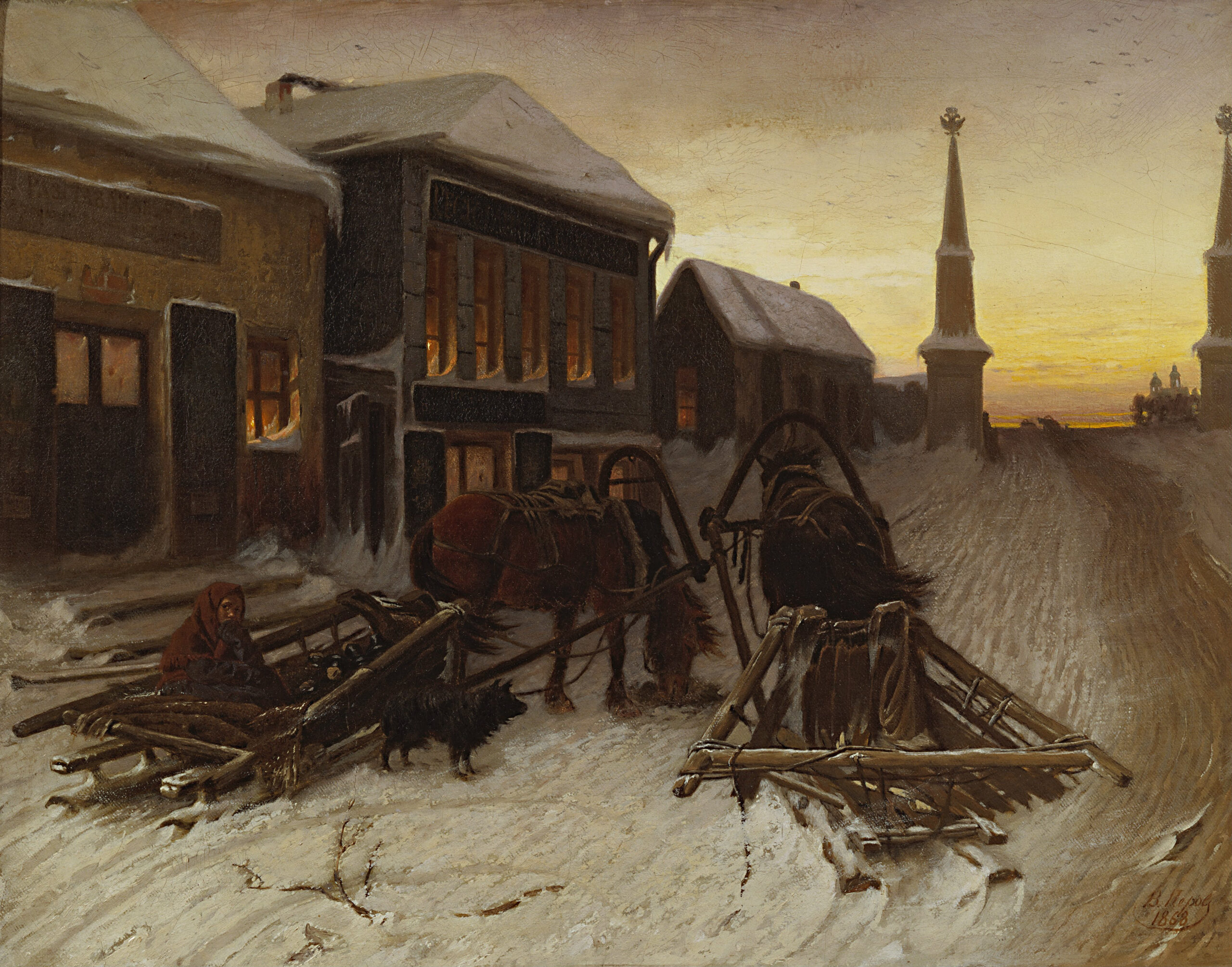
The White Whale had been ubiquitous in my life long before I first set sight on It. If my grandfather’s focus was more on ancient Greek, latin, francophone and romance languages literature, he did transmit an absolute reverence for “the classics”. Aesop and Homer, both Pliny, Balzac, Hugo, Cervantes and Dante were his pantheon, and…
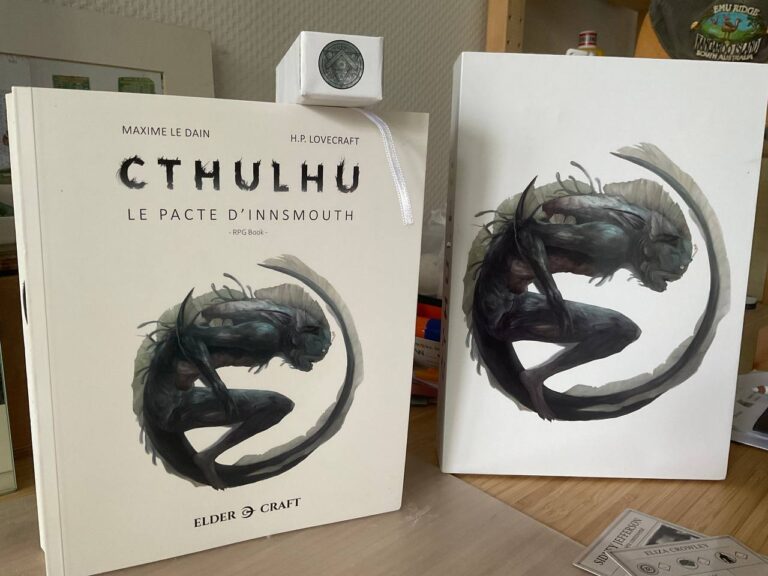
Maybe it’s the sleek minimalist black and white cover, maybe it’s the Deep One xenomorph occupying alone the back and front of the case, with merely ‘CHTULHU’ in smushed ink font on the spine, the neat little built-in die case. I’m just a sucker for aesthetics and they got me. In November 2021, Elder Craft…
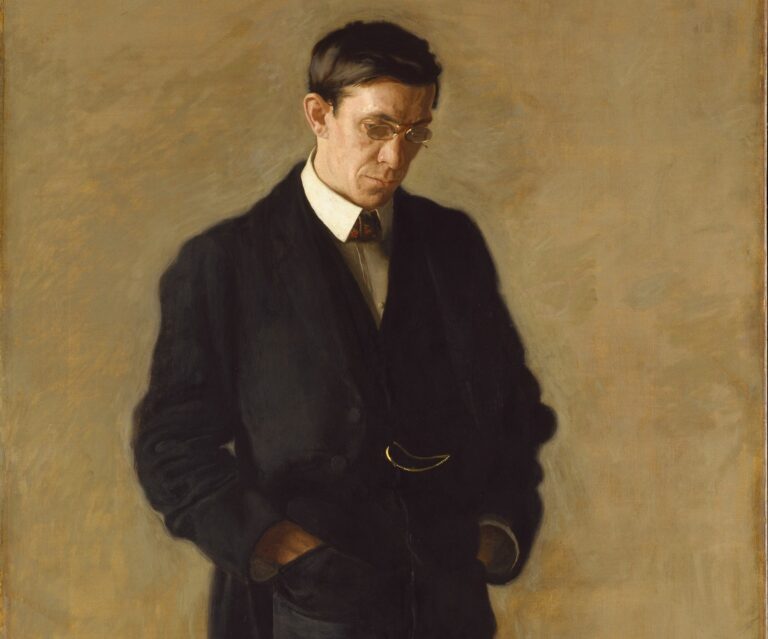
It was hatred at first sight. The moment the professor saw Jake during the dean’s induction speech, he was utterly consumed by antipathy. Why he should have felt this way when the student was but one harmless face lost in a sea of freshmen, he never knew. That ominous feeling, however, never left him. He…
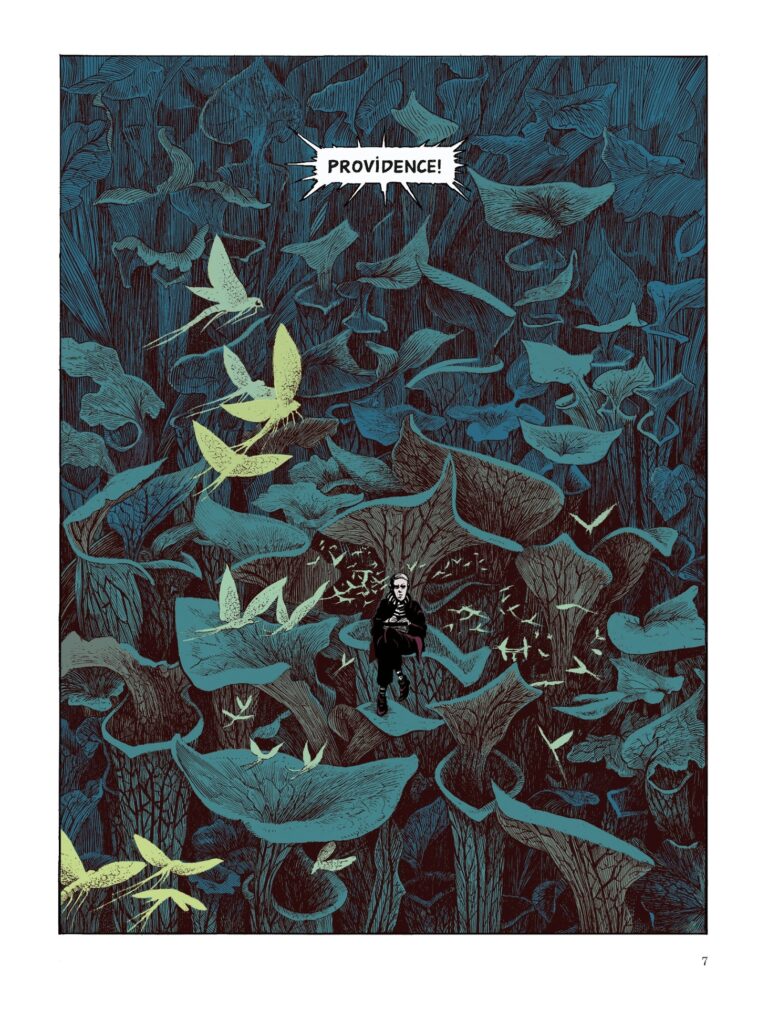
The Bestiary of Dusk is an artful homage to Lovecraft as weaver of Dreams, as an author questioning our limited perception of reality and sanity. Lovecraft himself is turned character in this bande dessinée, warden of the supernatural against which he protects visitors to the park he works at. Visually astounding, as pastel colors of…
Varg could pinpoint the exact moment everything accelerated down to one silky, sensuous summer night. Alone, at dusk, in the same park he had already spent a hundred evenings, the teen was soaking in the wondrous sight of a young woman training her lithe, focused border collie when to fetch and not to fetch. She…
Ok, here’s the thing. I don’t know much. This is my attempt to figure things out, to reevaluate where I’m at and how I feel about the following question. How can you consume (art) ethically under late capitalism? Because, yeah, that system informs our every thought and action. Sure. Something we all have to come…